Conferences
The Group's conferences are where members meet to study buildings and discuss their findings. Conferences are normally open to members only, although guests may be accepted if space is available - please see the Membership page for details of how to join the group.
Lists of past VAG conferences can be found on the Previous Conferences page.
Spring Conferences
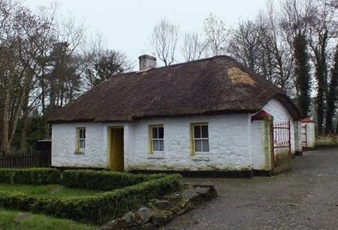
In the spring members and guests meet in a different part of the country each year to visit a selection of buildings in the local vernacular tradition. Local experts are on hand to explain the background and more experienced members help others to interpret them. In the evenings, lectures and discussions allow the day's findings to be explored further. Bursaries are usually offered each year to enable a registered student or a professional in the early years of his or her career to attend the spring conference. Conference enquiries: please email spring-conference@vag.org.uk.
Tuesday 11 to Saturday 15 June 2024 - in Ulster
Our next Spring Conference will be held in Northern Ireland. Wednesday's programme will explore the landscape of southern County Down. Thursday will be a circuit of Lough Neagh to see the buildings of central Ulster. Friday will involve a visit to the Ulster Folk Museum to see examples of rural and urban vernacular buildings from across Ulster followed by a guided tour of Belfast. Evening talks will include an overview of Ulster vernacular buildings, vernacular materials, and preservation of vernacular buildings. Accommodation will be at Stranmillis College in Belfast. Booking information has been circulated to members with the February 2024 newsletter, and is also available on the Members' Area of the website: closing date for booking is 12 April 2024. Bursaries are available - please see the bursary information for details (note that the deadline for bursary applications has been extended to Tuesday 16 April 2024).
Training Conferences
The Vernacular Architecture Group offered a short weekend conference in September 2023 aimed at those who are new to looking at vernacular buildings and/or would like the opportunity to learn more. The format was based on visits to buildings rather than papers. There was an emphasis on introducing people to examining buildings, covering basic vocabulary, some of the typical forms of vernacular buildings and how we go about investigating them. The conference focused on buildings in Ashwell, a small village in Hertfordshire full of fascinating buildings, visited as part of the VAG Spring Conference in 2017. We hope to offer further training conferences in future years. Conference enquiries: please email training-conference@vag.org.uk.
Members' Meetings
Since 2021, we have held an online members' meeting annually in October. This takes the format of 10-20 minute papers being given over Zoom, on any topic related to vernacular buildings of members' choosing, perhaps highlighting a specific building, raising a problem or question, or exploring a theme.
Winter Conferences
The winter conference takes a theme of current interest and explores it in depth through papers given by experts in the field. Bursaries are normally available for students or early career professionals to enable their attendance at the conference. Conference enquiries: please email winter-conference@vag.org.uk. The next winter conference will be in January 2025.
Other Conferences and Visits
Other VAG visits include trips to Maine in France in 2016, Denmark in 2014, Norway in 2011 and North America in 2004.